
Meeting
Cabinet - New Forest
Scheduled Time
Wednesday, 3rd June 2026
10:00 AM
Wednesday, 3rd June 2026
2:00 PM
Confirmed
03 Jun 2026
Council Chamber - Appletree Court, Beaulieu Road, Lyndhurst, SO43 7PA

Kate Ryan
In attendance

Karen Wardle
In attendance
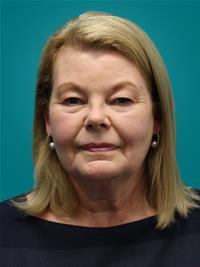



Alan Bethune
In attendance
Richard Knott
In attendance
Tracey Coleman
In attendance
Rebecca Drummond
In attendance
Tim Guymer
In attendance
Sara Hamilton
In attendance
Jamie Hollis
In attendance
Jess Hosegood
Employee Engagement Officer
In attendance
Sarah Rushby
In attendance
Sophie Sajic
In attendance
Jeannie Satchell
Economic Development Manager
In attendance
Ryan Stevens
In attendance
Matt Wisdom
In attendance








- Document Cabinet Minutes - 3 June 2026 05 Jun 2026
- Document Appendix 1 - Counsel Advice 05 Jun 2026
- Document Appendix 2 - Leading KC Advice 05 Jun 2026
· Hampshire Country Council election: The Leader reported she was impressed with the efforts made by hundreds of staff, ex-employees and other volunteers in delivering another successful election on 7 May. Led by the superb elections team, polling day and the count took place without fuss or fanfare and highlights how this Council and its staff can deliver on important priorities.
· Waste and recycling collection service: In May, the wholesale changes to the waste service culminated with the successful rollout of phase 3, the largest and final phase, covering around 36,000 homes. More than five million collections had now taken place across the district from over 80,000 homes under the new system. There were encouraging results, with recycling rates increasing, cleaner streets and safer collection methods for the waste crews. The Leader expressed her thanks to everyone involved for the considerable work that had gone into delivering one of the biggest changes to a frontline service in recent decades, and wished the Service Manager for Waste, Liz Mockeridge, well as she would go up for the Local Government Chronicle Rising Star award on 10th June, in recognition of her and the wider teams' brilliant efforts.
· Housing: The Council’s commitment to affordable housing delivery continued with 20 superb new dwellings delivered in Totton in April. Also, with several thousand private rented properties in the district, the Leader was pleased to promote the work of the housing service, ensuring tenants and landlords understood their roles and responsibilities following the introduction of the Renters’ Rights Act on 1 May. Through the Landlord Forum, with the last one held reaching a record attendance, and an awareness campaign, the message was being spread widely in what was a significant change to the landlord and tenant relationship.
· Chair and Vice-Chair roles: The Leader reported she was proud to see how the chair and vice chair roles of the Council’s various committees had been shared across the administration and opposition, in what she saw as a show of unity and the collective commitment to residents.
That the minutes of the meeting held on 1 April 2026, be confirmed and signed.
Members are asked to discuss any possible interests with Democratic Services prior to the meeting.
- Document LGR Srategic Approach report 26 May 2026
- Document Appendix 1 - Counsel Advice - Confidential 26 May 2026
- Document Appendix 2 - Leading KC advice- Confidential 26 May 2026
That Cabinet:-
1. Noted the petition and the strength of community feeling regarding the LGR decision and potential local impacts;
2. Noted the Council’s previously stated position, including that it unanimously supported an alternative option and raised significant objections to the option that government went on to select;
3. Noted the independent legal advice (Non-public Appendices 1 and 2), including the key practical considerations it identifies;
4. Having considered the options set out in the report and the independent legal advice which concludes that there is not any real prospect of persuading a court that a material error of law has been made, and that a challenge would have no real prospects of success, considered the best way to represent the interests of the New Forest and its communities is not to pursue a formal judicial review, and instead to focus the Council’s efforts on formally championing the New Forest’s needs and required protections through the transition arrangements to new councils, while making clear to Government the Council’s continuing objection to the decision; and
5. Noted that the independent legal advice will be published in full when the public interest in disclosing the information outweighs the interest in withholding it.
KEY DECISION:
Yes
PORTFOLIO:
Leader
ALTERNATIVE OPTIONS CONSIDERED/REJECTED:
As set out in the report.
DECLARATIONS OF INTEREST:
Cllr Heron declared a non-pecuniary interest, as the public speaker on this item, Emily Hartley-Binns was his daughter, and that the organisers of the petition, New Forest Together were his daughter and son in law. Cllr Heron also reported that he was a member of this organisation. He reported that as his interest was non-pecuniary, it would not be necessary for him to be exclude himself from participating and voting on this item.
DISCUSSION:
The Leader invited Emily Hartley-Binns to speak. Emily Hartley-Binns expressed her thanks, on behalf of New Forest Together, to officers and members for the work undertaken through the process. The seriousness of the decision before Cabinet was recognised and that the legal advice had been carefully considered. New Forest Together had taken their own independent legal advice which suggested that there remained credible avenues in order to challenge the decision. It was asked that the Council would not close the book on the process.
There was a recognition that NFDC might decide at the Cabinet meeting not to pursue a Judicial Review and that residents needed clarity on where things stood. It was suggested that Hampshire County Council were continuing with legal action through a Judicial Review and that a formal pre action protocol letter had been sent to Government.
It was requested that the District Council play a role in supporting HCC through this process, asking Cabinet to confirm that should HCC ask for evidence and background information, that NFDC would support any such request wherever appropriate. It was noted that there might be external evidence which had not been reviewed by the Council.
The following was asked:
· That the Council continue to press Government directly, by writing formally to the Secretary of State, to ask why option 1A had been judged strongest on financial sustainability and how the evidence submitted had been used and assessed.
· That the Council seek a further meeting with ministers so that community concerns could continue to be heard at the highest level.
· That any progress on the Local Plan proceed with caution, recognising that sites identified would come under a new authority, also highlighting that East Hampshire District Council had halted work on the development of their local plan.
· That a stakeholder group be convened, bringing together New Forest Together, key partners and stakeholders and the community to identify protections and to prepare for the future.
· Reference was made to the commitment made at the Council meeting on 13 April 2026 and that there were no positives in relation to Option 1A for the New Forest. It was requested that every option should be kept open, by continuing to press Government, supporting HCC wherever possible, and that should there be an opportunity to try and overturn the LGR decision, that it should be taken.
The Leader introduced the report and acknowledged the strength of feeling that the New Forest residents and communities had expressed, through the petition, public debate and the wider campaign. The Administration understood this and the Council was standing shoulder-to-shoulder with residents.
The Government’s decision to force the break-up of the historic New Forest communities was considered to be fundamentally wrong, undemocratic, and completely unacceptable. There was no mandate to split the Waterside from the rest of the district, going against the promise the Government made not to divide communities through the Local Government Reorganisation process.
The Leader also made it equally clear that the Council hadn’t simply recognised the strength of feeling in our New Forest residents from the sidelines, but had fought for the best interests and unity of communities throughout, actively pursuing and arguing for Option 1. This sought to keep the Forest whole and rural as part of a wider Mid Hampshire authority. The Council had objected strongly and consistently to the alternative options that would have seen any part of the Forest absorbed into a more urban, city-centred authority. The Council had advocated strongly against Option 1A, setting out that the boundary changes split New Forest communities. The Leader reported that this continued to be her view and that she would continue to make it clear to Government that they had made a historic mistake.
The petition debated by Council asked the Administration to seek independent legal advice on the Government’s decision and to seek a judicial review, if strong legal grounds could be found. In line with the commitment made at Full Council, the Council had explored all of its legal options.
At Full Council, the Leader confirmed that independent legal advice had been commissioned on the prospects of a judicial review.
The Council had not narrowly focused its efforts to try and challenge the decision based on any single issue, such as the break-up of communities. It had sought to establish any possible grounds of challenge, to give a meaningful chance of overturning the decision, which the Leader considered to be dreadful.
After receipt of the advice, and given the significant public interest in this decision, the Administration also obtained a second, independent legal opinion from King’s Counsel, in order to make sure the Council had tested the position thoroughly. On residents’ behalf, the Leader confirmed that they had left no stone unturned.
Both sets of independent advice were clear and consistent in stating there was no real or meaningful prospect of persuading a court that a material error of law had been made by the Government. Both sets of independent legal advice showed that a judicial review would have no real prospects of success. In other words, it would fail.
The advice also stressed that a judicial review would not be a re-run of the Government’s decision. Even if a legal error could have been established, the usual outcome was that the decision-maker would need to take the decision again, but this time, to do so lawfully. Unfortunately, this meant that even if grounds for a Judicial Review had been found, there was no guarantee that the Government would make a different decision on the New Forest.
The Leader recognised that for many residents and campaigners, it would be a difficult moment, one that was painful for her, the Administration, and for the Council. Furthermore, she explained that she felt Option 1A was the wrong choice and that the council was right to oppose it. Option 1A was a mistake, but the legal advice showed that the Government had the ability to impose that mistake.
The Leader felt it was right for the Council to support Option 1, an option that would have placed the New Forest District, as a whole, in a new rural council for Mid Hampshire, and that keeping the Forest united and whole would be the right solution for the district and its communities.
However, the Leader acknowledged that leadership meant being honest about the limits of the District Council’s legal position, about what could and could not be done and about what actions were likely to achieve results. On the basis of clear, emphatic independent legal advice, there were no strong grounds to challenge the Government in Court. A Judicial Review would have no real prospect of delivering the outcome desired. In the Leader’s view, pursuing a Judicial Review in view of that advice, would not be in the interests of the residents’ of the District.
The Leader clarified that this did not mean giving up, but that it would be necessary to decide the path which would give the New Forest the strongest possible voice over the next two years. It also meant that the Council’s continued objection of splitting the district would need to be made clear to Government, so there would be no misunderstanding about the Council’s position or the strength of local feeling.
The Leader made it clear for the benefit of the public and the media, that the decision due to be taken was about NFDC’s position on whether to pursue a judicial review. She recognised that other authorities might make their own decisions based on their own circumstances and advice, but that the District Council’s decision did not determine theirs, nor did it prevent any local campaign or individual exploring other routes independently.
Throughout all of this, members were reminded of the need to focus on the fact that the vital day-to-day services must continue. Residents should continue to access services in the usual way.
Finally, the Leader thanked those who had campaigned and petitioned for their passion, that there was sympathy to the cause, and that conversations would be continued. The report would not be the end of engagement with residents, but the point where the Council’s collective efforts would go towards shaping the best possible future arrangements for the New Forest.
The Assistant Director of Strategy and Engagement explained that the report detailed the LGR journey over the last 18 months, with working to develop the proposals, consultation and engagement undertaken, submission of option 1 as the preferred option and the council clearly opposing all other alternative proposals, the Government consultation and the decision announced by the Secretary of State in March 2026.
The report articulated the Council’s position throughout the LGR process and support for Option 1. Cabinet had instructed officers to seek a legal opinion on the potential grounds for a Judicial Review. This included the community strength of feeling and the petition which had been submitted to Council. The advice received was clear in that there would no real prospect of success and therefore officers did not recommend that the Council pursue a Judicial Review.
The Assistant Director of Strategy and Engagement, also reiterated what the Leader said in her introduction, that even if a Judicial Review were successful, it did not mean that a different decision would be taken by Government.
The Portfolio Holder for Finance and Corporate spoke of LGR expressing the view that it was unwanted and that he did not support the decision to split the District into two new unitary authority areas. That in his view, it would not deliver the anticipated savings or deliver on the criteria set out by Government. It would also further remove local government from the people it was supposed to represent.
The Portfolio Holder acknowledged that Hampshire County Council would be seeking a Judicial Review, focusing on financial sustainability. The Portfolio Holder would support HCC wherever possible throughout their Judicial Review and confirmed however, that seeking a Judicial Review would not be the right course of action for the District Council.
The Portfolio Holder for Housing and Communities spoke of the LGR announcement following the Council’s successful Peer Review in 2024. He supported Keeping the Forest Whole and this had also been supported by Test Valley and Basingstoke. He also acknowledged that Option 1A had been supported by 7 of the 14 Hampshire authorities and therefore assumed that the Government had applied some weight to this.
The Portfolio Holder for Planning and Economy, whilst agreeing with the previous speakers, supported the recommendation not to proceed with a Judicial Review was on the basis and that there were no grounds for review and that it would be irresponsible to go against the legal advice received.
The Portfolio Holder for Environment and Sustainability expressed his thanks to the Leader for the passion in her introduction to the report. He echoed the previous comments made and that whilst he did not agree with the Government decision, he supported the recommendations contained in the report.
The Portfolio Holder for Community, Safety and Wellbeing supported the comments already made and spoke of his frustration LGR would see an end to the District Council which was well run, had a balanced budget and financially sound.
A number of non-Cabinet members spoke at the meeting, many supporting previous comments. The following points were made:
· That Hampshire County Council had supported the fast-track process for LGR.
· That the Council should continue to voice its objection to the decision to Government as well as to the other Hampshire authorities.
· That there should be proactive engagement on the Structural Changes Orders in order to influence the new unitary authorities.
· That work on the transfer of assets was important to ensure they were secured for the future within the local communities, in particular for town and parish councils.
· That there was a strong feeling in the local communities of disappointment in the decision, particularly for the residents in the Waterside.
· That moving forwards the Council should do its best to support residents, businesses and local communities of the New Forest and to influence the new unitary authorities to get the best outcome for them.
· That there needed to be communication of the decision and that it was not something the Council had control over.
The Assistant Director – Strategy and Engagement, confirmed that the council had a clear and strong communications plan, which included a range of stakeholders, service users, tenants and residents and that this would be used to send out clear messages to a range of audiences.
- Document LGR Implementation report 26 May 2026
That Cabinet:-
1. Noted the update on the Secretary of State’s decision for local government reorganisation in Hampshire and the Isle of Wight and the next steps for mobilising delivery;
2. Approved and recommended that Council also approve the appointment of Cllr Jill Cleary as the Joint Committee representative for the Mid-Hampshire future unitary authority and the appointment of Cllr John Sleep as the Joint Committee representative for the South-West future unitary authority, including any joint committee arrangements ahead of the Structural Changes Order coming into effect;
3. Agreed that in developing interim warding arrangements for both new councils, the following principles should be prioritised:-
· The promotion of acceptable levels of electoral equality;
· Reflecting community identity and interests; and
· Where possible, preserving Town and Parish Council boundaries within wards.
4. Delegated authority to the Chief Executive, in consultation with the Leader of the Council, to submit the council’s final response to the Structural Changes Order letter from the Deputy Director for Local Government Reorganisation at MHCLG dated 26th March 2026; and
5. Approved the appointment of the Portfolio Holder for Planning and Economy (Cllr Derek Tipp) to the Hampshire and the Solent County Combined Authority Planning Advisory Board and the Deputy Leader of the Council (Cllr Steve Davies) as standing deputy.
KEY DECISION:
No
PORTFOLIO:
Leader
ALTERNATIVE OPTIONS CONSIDERED/REJECTED:
As set out in the report.
DECLARATIONS OF INTEREST:
None
DISCUSSION:
The Leader introduced the item, reporting that whilst the legal considerations around local government reorganisation had been progressing, attention had been turned to what came next and how the Council could best shape and inform the next phase.
It was highlighted that this was important, because engaging actively in implementation should not be read as agreement with the Government’s decision. The Council had been clear and consistent in opposing the option which had been chosen. It was important that as the process moved into the implementation phase, that it was the council’s responsibility to ensure that the New Forest’s voice was strongly represented in what happens next.
The LGR Board had been carefully considering the response to the Government’s recent letter, the matters likely to be included in the Structural Changes Order, and the work that was underway across Hampshire to prepare for transition.
Officers were working closely with partner authorities and Hampshire County Council, who were currently leading the programme, to help shape a robust implementation plan. That included putting in place the right governance arrangements, ensuring there would be the resources required to support a safe, lawful and effective transition, and making sure the practical interests of New Forest residents were reflected in the design of future arrangements.
It was recognised that local government reorganisation across Hampshire and the Isle of Wight was particularly complex, requiring significant effort and resource from the Council and that it must be treated as a major corporate priority. It was therefore necessary to continue to review the plans and capacity as an organisation, so that the excellent services for residents be maintained and contribute effectively to the transition process now underway.
The Leader highlighted that this was not simply a technical or administrative exercise, but was about ensuring that, as the two new councils would begin to take shape, the identity, interests and needs of New Forest communities would not be diluted or overlooked. That meant influencing not just structures, but how local representation, service access, place-based decision-making and community voice would be carried into the future.
The Assistant Director of Transformation highlighted that the report outlined the next steps following the Government decision which included shaping the Structural Changes Order. The report detailed the matters the Ministers had decided to inform the Structural Changes Order and matters where further information had been requested, including warding arrangements, cycle of parish and town council elections and the returning officer for the shadow authority elections in May 2027.
The report also detailed the transition periods, including establishing joint committees. It sought approval of the nominations to those joint committees and on the work around mobilisation and implementation, as well as the resource implications.
The Portfolio Holder for Finance and Corporate commented on the fact that the new Strategic Authority, whilst designed by Government as part of the Devolution Priority Programme to deliver a regional Mayor, would not do so until 2028, leaving it operating as a County Combined Authority without a Mayor from 2026-2028.
A non-Cabinet Member, who represented the Waterside area, spoke about recommendation 2 in the report, and felt that a member representing the Waterside area would be better placed to be a representative on the Joint Committee of the South-West future unitary authority, rather than the proposed member who represented the Totton area. It was highlighted that these residents did not feel supported and that a Waterside member would be better placed to do this.
The financial aspect of LGR was also an area of concern, recognising that the impact on the District Council would be greater with the division into two new unitary authorities.
In response to a question from a non-Cabinet member about the support to staff, the Chief Executive reported that opportunities had been put in place for staff through the Transformation programme, which had then been moved to LGR. The plan was current and there were a range of activities in place through the People Strategy which had been adopted. This included for example, investment in a digital skills programme and also an award event, building a sense of pride and achievement. Regular ‘pulse’ surveys were being conducted, with a formal staff survey later in the year, which would provide information to be built on over the remaining time of the District Council.
Finally, a non-Cabinet member spoke of the importance of the assets of the District Council and ensuring that they remained available to local residents and the local community.
- Document Community Grants Report 26 May 2026
That, subject to consultation and engagement, Cabinet approve in principle:
1. To continue with the Band A three-year rolling funding agreements of £72,000 per year to support our key partners;
2. To continue to fund the two Community Transport schemes to 31 March 2028;
3. To amend the Revenue Grant process, moving away from the current centrally administered approach to increased ward Councillor empowerment, through an increase in Councillor Community Engagement Grant from £1,000 to £2,500 from 1 April 2027;
4. To rely on the annual CIL grant process as the right means to release capital funding out to the New Forest communities, thus ending the parallel Capital Community Grant programme;
5. To allow proceeds from the New Forest Community Lottery central fund to be distributed by the Service Manager, Revenues, Benefit and Customer Services, in consultation with Portfolio Holder, Community, Safety and Wellbeing; and
That Cabinet noted:
6. The result of the proposed changes equates to an annual saving of £113,000, which will be earmarked as a contribution towards the Councils forecast budget deficit for 2027/28 of £1.499million.
KEY DECISION:
Yes
PORTFOLIO:
Community, Safety and Wellbeing
ALTERNATIVE OPTIONS CONSIDERED/REJECTED:
As set out in the report.
DECLARATIONS OF INTEREST:
None
DISCUSSION:
The Portfolio Holder for Community, Safety and Wellbeing introduced the report, and spoke of his fortunate portfolio holder position, often being able to announce the good and positive initiatives supported by the council. The Portfolio Holder acknowledged that charities and good causes were the bedrock of local communities and that it was with great pride each year that he could present a report outlining the many charities supported through the community grant scheme.
The Portfolio holder however, acknowledged that the community grants process required a considerable amount of officer and member time through the Task and Finish Group and that there was a significant amount of administration around the grant process. As a result of LGR and the disaggregation of services, there would be pressure on staff to focus on this work and that workstreams should be reviewed in light of this and the report proposed to end the community grant process. The report recommended that the members’ community engagement grant be increased from £1,000 to £2,500 from 1 April 2027 and it was recognised that this could have a huge impact on wards. It was cited that if the Totton ward members worked together there could be £17,500 in the Totton area, and this would increase to £22,500 if Marchwood and Eling Ward was included, in order to demonstrate the level of funding which would be available in areas of the District.
The Portfolio Holder felt that the proposed increase in grant would enable and empower ward members to support their local communities more. They would be supported by staff to provide advice, on request to members in spending this additional grant.
It was highlighted that the New Forest community lottery had commenced last September, supporting over 90 good causes in the community. This was a positive initiative which would be left as a legacy and the Portfolio Holder encouraged members to actively promote the lottery to support local groups with raising funds.
The Portfolio Holder, in his summing up highlighted that the recommendations would support officers in their workload associated with LGR and be the best and fairest option on staff as well as the community.
The Services Manager – Revenues, Benefits and Customer Services took members through the recommendations contained in the report, recognising that they were subject to consultation and wider engagement later in the year and therefore Cabinet approval was sought, in principle.
The Portfolio Holder for Finance and Corporate reported that it was his responsibility to ensure that the council delivered a balanced budget each year and that the challenge was becoming greater, year on year. Reference was made to the fair funding review and that for the financial year 2027/28 there was a funding gap of just under £1.5 million and therefore difficult decisions would need to be made.
The Portfolio Holder acknowledged that grants were an important part of the local community, but that the council needed to deliver savings. It was felt that that increasing members’ engagement grants would enable each member to spend their grant within their local area and that they were best placed to know where their grant would make a difference to local communities.
A non-Cabinet member expressed concerns regarding a reduction of funding in the District, used to support local community groups. It was recognised that the community grant process was rigorous and had improved over recent years, enabling a greater level of oversight than the members engagement grants. It was acknowledged that the community grant scheme was a significant level of work for officers but that there were recognised benefits in the local community. There was concern that there would be risk to those most vulnerable in the community without the broad oversight of the grant process.
A number of other non-Cabinet members spoke raising concerns of the removal of the community grant process, recognising the positive work carried out through the Task and Finish Group. It was also recognised that the voluntary and charitable sector were increasingly finding it more difficult to obtain funding.
A non-Cabinet member spoke of the importance of signposting and of communication, to ensure that the District Council highlighted the funding streams available to charities and community groups, in particular to try and target those hard-to-reach groups.
The Portfolio Holder for Community, Safety and Wellbeing reported he would take on board the points made. He acknowledged that some feedback received from members of the community grant process was that some charities missed out on funding and therefore the recommendation to increase members’ individual grants would enable each member to have a greater opportunity to support the charitable organisations operating in their local area.
Finally, the Leader, highlighted recommendation 6, which noted that the proposed changes, would equate to an annual saving of £113,000, which would be earmarked as a contribution toward the Council’s forecast budget deficit for 2027/28 of £1.499 million.
- Document Economic Development Strategy Report 26 May 2026
- Document Appendix 1 - New Forest Economic Development Strategy 2026–2030 26 May 2026
- Document Appendix 2 - EDS feedback 26 May 2026
That Cabinet: -
1. Noted the feedback received on the Strategy from the Place and Sustainability Overview and Scrutiny Panel and the focused consultation; and
2. That Cabinet recommended that Council approve the New Forest Economic Development Strategy 2026–2030
KEY DECISION:
Report to Cabinet and Council
PORTFOLIO:
Planning and Economy
ALTERNATIVE OPTIONS CONSIDERED/REJECTED:
As set out in the report.
DECLARATIONS OF INTEREST:
None
DISCUSSION:
The Portfolio Holder for Planning and Economy reported an amendment to recommendation 2, as follows:
That Cabinet recommend that Council approve the New Forest Economic Development Strategy 2026–2030.
The Portfolio Holder introduced the new Economic Development Strategy for the New Forest District, setting out a clear five?year plan to support jobs, investment and sustainable growth. It provides a practical framework for a strong, resilient and inclusive local economy, aligned with the Council’s Corporate Plan.
The Strategy focused on creating opportunities for residents and businesses by boosting skills, supporting growth, attracting investment and revitalising town centres, while addressing key challenges such as a declining working?age population and low productivity. It sought to build on the New Forest’s unique strengths, including its natural environment and key sectors such as tourism, marine industries and green technologies, to support higher?value jobs and long?term growth.
The Strategy placed a strong emphasis on partnership working, including with the Solent Freeport and Hampshire partners and would help to unlock investment, regeneration and infrastructure opportunities. It had been developed in the context of local government reorganisation, to ensure the New Forest would be well prepared for future changes, strengthening the ability to attract funding and influence decisions.
Finally, the Portfolio Holder reported that the Strategy provided a clear and focused plan to maintain momentum, support communities and ensure that local people benefit from growth across the district.
The Economic Development Manager reported that the Economic Development Strategy provided a focused and forward-looking framework to guide economic development across the new Forest. Built on clear priorities it strengthened the Council’s ability to respond to emerging opportunities and challenges, whilst maintaining momentum in delivering inclusive growth.
The strategy was aligned with partners and key plans ensuring a co-ordinated approach as we move into a period of LGR. Approving it now, would position the New Forest to demonstrate leadership, attract investment and take full advantage of future opportunities for our communities.
A non-Cabinet member recognised that the strategy required working with partners, and that there were blocks to improve opportunities for employment for example, particularly for young people. Where employers, might not offer permanent positions, that people had particular training needs and that transport was often a contributing factor impacting on employment.
A non-Cabinet member questioned how there could be a guarantee that the strategy would carry through to the new unitary authorities. The Chief Executive responded, highlighting that there was no guarantee on what any new authority would do. However, through experience of reorganisation, having a strategy which was robust and comprehensive, it would be in the best position moving forwards to any new authority, and it could influence the new combined authority and growth plan.
The Economic Development Manager also provided reassurance to members that officers were already working closely with the partner authorities the District Council would join with. This collaborative and joint working would set the scene for sustainability for the priorities emphasised in the Economic Development Strategy.
Join the Discussion
You need to be signed in to comment.
Sign in